Should We Punish Children?
Why parents should correct children with clarity and consistency. Correction builds moral character.
If we don't punish children, the law and life will punish them.
# The Old Lesson from Aesop
I first learned that from an old Aesop’s fable, The Thief and His Mother. A boy steals a pencil from school. Instead of correcting him, his mother praises him. Next time it is a book. Then money. As he grows older, the thefts become bigger until one day he is caught.
Before being dragged to jail, he tells his mother, “If only you had slapped me when I stole that pencil, I would not be here today.”
That story stuck with me because it feels so close to reality. The first time a child lies or cheats, it may look harmless. But if you do not correct it, the habit grows.
- Maybe they do not become thieves.
- But they grow up without values.
- They cut corners in business.
- They cheat in relationships.
- They justify things to themselves.
And they do not build lives worth imitating.
# The Purpose of Punishment
For me, the purpose of punishment is clear:
- It is not to create fear or terror.
- It is not to vent my frustration.
It is to develop moral character. Correction is the word I prefer. Correction teaches them what is right and what is wrong, what is acceptable and what is not.
# Certainty vs. Severity
Here is something I realized early. Severity does not matter as much as certainty.
If today I punish harshly and tomorrow I ignore the same mistake, my kids get confused. But if I am consistent, they know with clarity: if I cross this line, there will be consequences.
Certainty is more important than quantum.
# What Is Punishable at Home
In our home, we made only two things punishable:
- Telling lies
- Disrespecting elders
That’s it.
Everything else—like waking up late, dragging feet on math homework, or sneaking in YouTube beyond the set time—might get them a stern lecture, maybe a scolding, but not punishment.
We repeat these two rules again and again. Around the dinner table, during car rides, even when we talk about “family values” at home, these two always come up. My boys know the rules, and they know why they matter.
# Doing Everything Possible to Avoid Punishment
And even with these two rules, I try to do everything possible to avoid punishment.
- I set values.
- I talk with them often.
- I explain why something matters.
- I try to live out what I expect from them.
If I do not want them to lie, I must not lie. If I want them to show respect, they should see me showing respect to my parents, my wife, and even strangers.
When the environment is clear and consistent, most situations can be handled without punishment. But when a line is crossed, consequences follow.
# Why Lies and Disrespect Matter
Because lying is not just about fooling someone else. It begins with fooling yourself. And once you learn to lie to yourself, you can justify anything. It is a slippery slope into moral collapse.
Disrespect is the same. If you cannot respect parents, grandparents, or even the old man sweeping the street, you will not respect anyone who looks different from you.
Truth and respect. These two are the pillars I want my children to build their lives on.
# The Danger of Parental Anger
I also know where many parents go wrong. Often what we call punishment is not really correction. It is transferring our anger. We have a bad day at work, the boss shouts, traffic wears us down, and we come home tired. When you come home, all that you hear are the mischiefs of your kids.
Instead of patient correction, we unload our frustrations on them. The child has no idea what hit them. That is not discipline. That is misplaced anger.
I fought against this often. When stood in-front of the kids to correct them, I asked myself: "Am I correcting or just venting?"
# How Punishment Has Changed Over Time
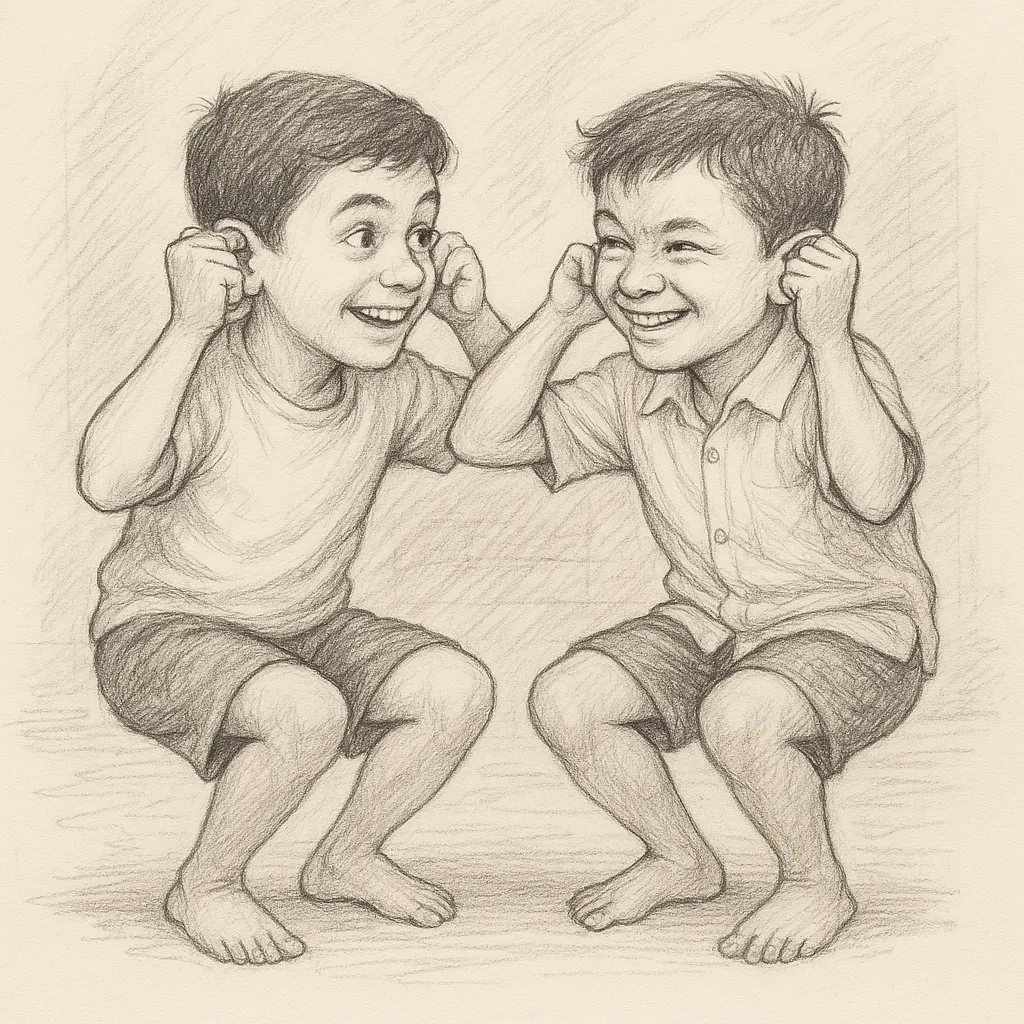
The way I punish has changed over time. When they were little, a sharp stare or a pinch on the arm was enough. Sometimes a slap on the bum. My younger one, though, made this almost impossible. He would pull faces, act silly, and make us laugh in the middle of scolding him. My elder one was more sensitive. He took punishments to heart. So I had to adapt.
As they grew, I turned to physical consequences:
- Topukarnam (holding ears and squatting 20 times).
- Burpees.
- Once, both brothers holding each other’s ears and squatting together.
Yes, we have a stick at home. I have used it, but only rarely and only for serious matters. Before I touched it, I always asked myself: am I correcting or am I angry?
By the time they turned twelve, punishments almost disappeared. Now I treat them as adults. I sit with them and explain what went wrong. Often before I finish, they admit their mistake or apologize.
The stick has gathered dust.
# Why I Still Believe in Correction
Do I enjoy punishing them? Not at all. It drains me. It breaks the warmth at home. After a punishment, it takes hours, sometimes a day, before the laughter comes back. That is why I avoid it as much as possible.
But if I do not correct them, life will. And life is much harsher.
Looking back, my parents raised me with strict discipline. I did not like it then, but today I know how much of my success came from it.
And that is why I believe this deeply: better a child learns consequences in the safe walls of home than in a courtroom or on the streets.
Punishment, when done right, is not about anger or power. It is about correction, about character, about preparing them for life.
Got comments? Or questions? Ask them on LinkedIn or X or on Bluesky
This is part of Our Homeschooling Experiment.
Image generated via ChatGPT.
Under: #homeschool