Christ Continues His Mission
What is the mission of Christ, and how does it continue today? This study of Acts 3 connects Isaiah 61, Luke 4, and Acts 1 to show how Jesus continues His mission through His Church.
In my previous sermon, we looked at the first Beatitude: "Blessed Are the Poor in Spirit" Jesus begins the Sermon on the Mount by reminding us that the kingdom of God belongs to those who recognize they cannot rescue themselves. Spiritual poverty is not weakness. It is the starting point of grace. Until we know that we are helpless, we will never reach out for the One who can save us.
Acts 3 answers the natural question that follows. If we cannot rescue ourselves, how does God rescue us?
The answer stretches across the Bible.
In Isaiah 61, God promised that His Anointed One would come to proclaim good news to the poor, bind up the brokenhearted, proclaim freedom for captives, and release those who lived in darkness. Rescue was not an afterthought. It was God's mission from the beginning.
When Jesus stood in the synagogue at Nazareth, He read that very passage. Then He closed the scroll and said, "Today this Scripture is fulfilled in your hearing" (Luke 4:21). Jesus declared that Isaiah's promise had arrived. He was the One sent by the Father to rescue the broken, restore the outcast, and announce the kingdom of God.
After His resurrection, Jesus did not announce a new mission. He entrusted the same mission to His disciples. In Acts 1, He promised that the Holy Spirit would come upon them and empower them to be His witnesses, beginning in Jerusalem and extending to the ends of the earth. The apostles were not asked to invent a new ministry. They were called to continue Christ's.
That is why Acts is so remarkable. Luke begins the book by saying that his Gospel recorded all that Jesus began to do and teach (Acts 1:1). The implication is clear. The book of Acts records what Jesus continues to do through His Spirit-filled Church.
Acts 3 is the first public miracle after Pentecost. It is more than the story of a lame man who learns to walk. It is the first public demonstration that Christ's mission continues.
# Christ continues His mission through prepared people
Luke introduces the story with a simple sentence.
"One day Peter and John were going up to the temple at the time of prayer, at three in the afternoon."
The miracle begins long before the healing. It begins with two men whom Christ had already been preparing.
Peter is no longer the impulsive disciple who denied Jesus three times. He is also no longer the disciple who compared himself with John. After Jesus restored Peter on the shore of Galilee, Peter asked, "Lord, what about him?" Jesus answered, "What is that to you? You follow me" (John 21:21-22). Peter had learned to stop looking sideways and start looking at Christ.
Now Luke deliberately places Peter and John together. The two men walk in unity. The rivalry has disappeared. The Holy Spirit has not only given them power. He has shaped their character.
They are also going to the Temple for prayer. Pentecost had already happened. They had already experienced the outpouring of the Holy Spirit. Yet they continued to gather with God's people in worship. Their experience of the Spirit did not replace prayer or fellowship. It deepened both.
The timing is also significant. Luke tells us that it was the ninth hour, the traditional hour of prayer. It was also the hour when Jesus gave His life on the cross. The hour that reminded Israel of Christ's sacrifice became the hour when Christ's power was publicly displayed through His Church.
Notice something else. Peter and John were simply walking to prayer. They were not searching for someone to heal. They were faithful in ordinary obedience when God interrupted their routine.
This is often how Christ works. Before He works through us, He works in us. He prepares our hearts before He prepares our ministry. He restores our failures before He entrusts us with serving others.
That should make us pause.
Are we allowing Christ to prepare us? Are we growing in unity with other believers? Are we people of prayer? Are we faithfully present where God has placed us? Christ continues His mission through people whose lives He has first transformed.
# Christ continues His mission by restoring broken lives
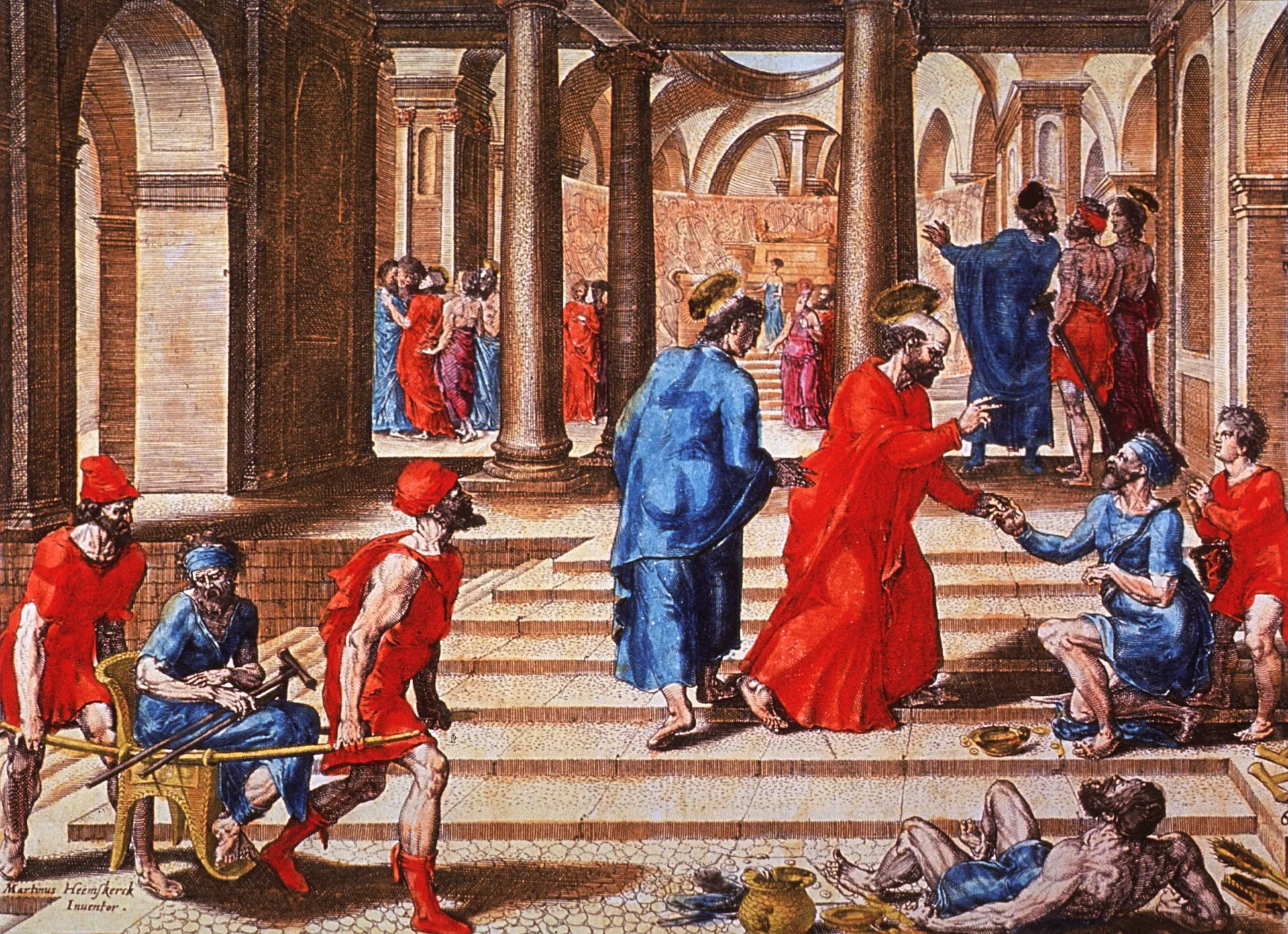
As Peter and John approached the Temple, they met a man who had been lame from birth. Every day he was carried to the Beautiful Gate to beg from those entering the Temple.
His expectations were small because his world had become small.
He did not ask for healing. He asked for money. A few coins would make today easier. Tomorrow he would return to the same gate and ask again.
Peter looked at him and said, "Silver or gold I do not have, but what I do have I give you. In the name of Jesus Christ of Nazareth, walk."
The man expected provision. Christ gave restoration.
This is how Christ's mission has always worked. He addresses needs, but He never stops there. He goes deeper than the problem we recognize and restores what is truly broken.
Paul captures this truth in Ephesians 3:20.
"Now to him who is able to do immeasurably more than all we ask or imagine..."
The lame man asked for enough to survive another day. Christ gave him a new future.
That is not only the man's story. It is ours. Many of us approach God with limited expectations. We ask Him to make our circumstances slightly easier. We ask Him to remove one problem. We ask Him to help us survive another week.
Christ often intends far more than we imagine.
This also connects naturally with Jesus' teaching about the poor in spirit. The lame man could not rescue himself. Others could carry him to the Temple, but they could not change his condition. Rescue had to come from outside. That is the gospel.
We cannot rescue ourselves from sin, guilt, or death. Christ comes to us while we are helpless. As Paul writes, "While we were still powerless, Christ died for the ungodly" (Romans 5:6).
Christ also chooses to rescue people through people. Peter and John became His instruments that day. The miracle was Christ's work, but He chose to perform it through ordinary disciples who were available to Him.
Perhaps the greater miracle is not that the lame man walked. It is that Christ continues to work through people He has already rescued.
# Christ continues His mission by multiplying witnesses
The healing did not end at the Beautiful Gate. Luke tells us that the man entered the Temple walking, leaping, and praising God. Everyone recognized him. The man who had once sat outside the Temple was now worshipping inside it.
His restored life drew a crowd.
Peter understood what was happening. He did not use the moment to draw attention to himself. Instead, he pointed everyone to Jesus. The miracle became the doorway for the gospel.
This pattern appears throughout Acts.
Christ restores.
People notice.
The gospel is proclaimed.
More people believe.
The mission continues.
Psalm 126 captures the same movement. After God restored His people, they were filled with joy. Then the surrounding nations said, "The Lord has done great things for them."
God's work became visible because God's people could not remain silent.
The same thing happens in Acts 3. One restored man praises God. One gathered crowd hears the gospel. The mission begins to spread beyond one miracle into many transformed lives.
Christ never intended His work to stop with the person He rescues. Every restored life becomes another opportunity for someone else to encounter Christ.
That is why Acts is not primarily a book about miracles. It is a book about witness. The miracles serve the mission. They point people to Jesus.
The same question confronts us today.
Has Christ's work in my life become visible enough that others are drawn to Him? Am I simply grateful for what He has done for me, or am I allowing my restored life to become part of His continuing mission?
Isaiah promised the mission. Jesus fulfilled the mission. The Holy Spirit empowered the mission. Acts shows the mission continuing.
The remarkable truth is that Christ has not stopped working.
He still restores broken lives. He still works through ordinary people. He still gathers worshippers. He still calls people to Himself.
The story of Acts 3 is not simply the story of Peter, John, or a lame man at the Temple gate. It is the story of the risen Christ continuing His mission through His people.
The question is no longer whether Christ's mission continues. The question is whether we are willing to join Him in it.
If you liked this, you might also like my other sermons.
Image from: Wikimedia
Under: #faith