Keeping God’s Word at the Center of Church Growth
What should a church do after it is built? Keep God’s Word central by reading it publicly, responding in faith, explaining it clearly, and sharing the work.
For the past three years, we have been building a church through the funds and donations of friends, along with the hard work of the church members. Most of the members are daily laborers, and many of them worked every day, sometimes more than 10 hours a day for weeks, to complete this church. Throughout this journey, we kept meditating on the book of Nehemiah and drawing inspiration from it. We followed his model of praying, planning, and gathering people. Now that the church has been dedicated, it felt fitting to return to the same book and reflect on how we should build from here.
# Beginning with Nehemiah Again
When we started building this church, we spent a lot of time meditating on the book of Nehemiah. We looked at how Nehemiah prayed, how he planned, and how he gathered people so that everyone would put their hand to the work.
Now that the building is complete, it is only appropriate that we return to Nehemiah again. But this time, not to the beginning. We look at what happened after the walls were built.
Because what we do after the building is finished will determine what this place becomes.
In Nehemiah chapter 8, after the wall of Jerusalem was rebuilt, the first thing Nehemiah did was to gather the people and bring Ezra the priest to read the Book of the Law.
So on the first day of the seventh month Ezra the priest brought the Law before the assembly, which was made up of men and women and all who were able to understand.
This is where we begin.
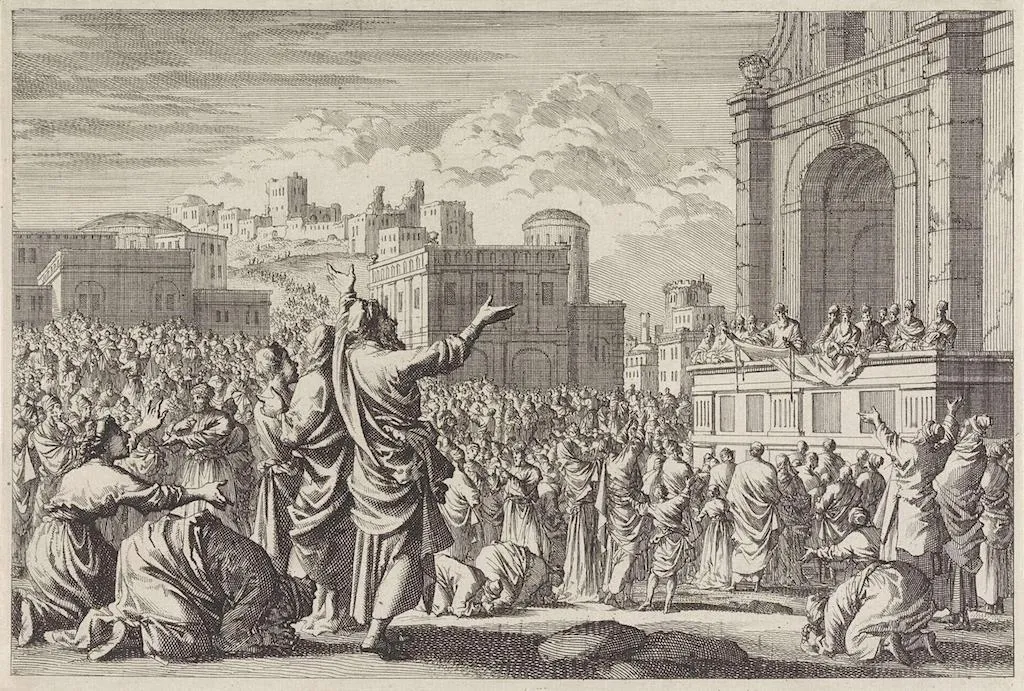
Ezra publicly reads the laws of Moses
# The Word Restored to the Center
After all the work, after all the effort, the first thing they did was to bring the Word of God to the center.
They could have rested. But instead, they gathered to hear the Word.
Ezra read from morning till noon, and the people listened attentively. This was not casual listening. This was hunger.
Paul writes in 1 Timothy 4:13, “Devote yourself to the public reading of Scripture.” This shows us that reading God’s Word together is not optional, it is essential.
Today, we all have personal Bibles. We can read on our own. But in doing that, we have slowly lost something important, reading the Word of God together as a people.
This passage is not asking us to copy the exact number of hours. But it is clearly showing us the priority.
If this church is to grow, we should read the Word of God when we come together. That's how it will remain to guide us, correct us, and sustain us.
# The People’s Response to the Word
When Ezra opened the Book, the people stood up. They lifted their hands, they said, “Amen, Amen,” and they bowed down and worshiped the Lord.
They were not passive listeners. Their whole being responded.
When the promises of God were spoken, they said, “Let it be so.” When the commands came, they agreed.
In 2 Corinthians 1:20, it says, “All the promises of God are Yes in Christ. And so through Him the Amen is spoken by us.”
Amen is not just a word. It is agreement. It is saying, “Yes Lord.”
In Psalm 134:2, it says, “Lift up your hands in the sanctuary and bless the Lord.”
This shows us that reverence is not ritual. It is response.
Today, we are often quiet and reserved. But when we recognize that God is speaking through His Word, there must be a response in us.
Our hearts must respond. Our voices must respond. Our lives must respond.
# The Word Explained Clearly
Nehemiah 8:8 says that they read from the Book of the Law, making it clear and giving the meaning so that the people understood what was being read.
Reading alone is not enough. The Word must be understood.
That is why the Levites stood among the people and explained the meaning.
We see the same pattern in Luke 24:27, where Jesus explained the Scriptures to His disciples.
God’s Word is meant to be understood and lived.
Even today, this is necessary. It is not only about reading or preaching, but also about explaining. So that people can understand clearly and apply it in their daily lives.
When the Word is understood, it begins to shape how we think, how we live, and how we decide.
# The Work is Shared
Ezra did not stand alone. There were others with him. There was structure. There was participation.
We see the same principle in the early church in Acts, where responsibilities were shared so that the work could continue effectively.
In 1 Corinthians 12:12, it says that the body is one but has many parts.
This means the work of God is not for a few people. It is for everyone.
You have already shown this. This church was not built by one person. It was built by all of you.
In the same way, going forward, the responsibility must be shared.
Some will pray. Some will serve. Some will clean. Some will organize. Some will help in different ways.
But everyone has a role.
Church growth is not only about attendance. It is about participation.
# The Commitment We Must Make
In Nehemiah 10:39, the people say, “We will not neglect the house of our God.”
This is a strong commitment.
During the building phase, there is excitement and unity. But once the building is complete, there is a danger that people step back.
But here, the people did not step back. They stepped forward with commitment.
In Hebrews 10:25, we are told, “Do not neglect meeting together.”
Today is not the end. It is the beginning.
Now the real responsibility starts.
This is not just a building you have constructed. This is a house you must continue to care for, both spiritually and practically.
So this must be our commitment. That we will not neglect the house of God. That we will remain connected, responsible, and committed.
# Let us look at Nehemiah to build our church
When we look at Nehemiah, we see a clear pattern.
The Word was brought to the center.
The people responded with reverence.
The Word was explained with clarity.
The work was shared among everyone.
And the people made a commitment.
If we follow this pattern, this church will not just be a building. It will be a living, growing, strong house of God.
So let this be our foundation.
Keep the Word at the center.
If you liked this, you might also like my other sermons.
Image from Look and Learn
Under: #faith